System integration
The Store Lifecycle Management (SLM) system manages data related to Pepco stores and automatically transfers it to 19 other systems, adjusting the information depending on the stage: from potential locations, through approved stores, to stores ready for opening.
Netwise has developed a proprietary integration engine based on Azure Service Bus and Dataverse, which ensures fast and secure data flow between systems. Thanks to API endpoints managed by Azure, the system smoothly transmits store information and any changes that occur within them.
Key Benefits for PEPCO
The implementation of the SLM system significantly increased PEPCO’s operational efficiency by improving store management process.
- Location Potential Assessment The system SLM enables precise analysis of new location potential, aiding in expansions decisions
- Opening New Store Automate the process of opening new stores, ensuring efficient task and schedule management.
- Relocation Existing Stores Supports store relocations by automatically managing the closure of old and the opening of new locations.
- Generating Reports with Power BI Advanced Power BI reports provide detailed data on store operations.
- Contract management Property Tool enables automatic renewal and adjustment of contracts, ensuring effective document management
- Monitoring Store Cannibalization SLM effectively monitors the impact of newly opened stores on existing locations.
Optimal Store Process Management
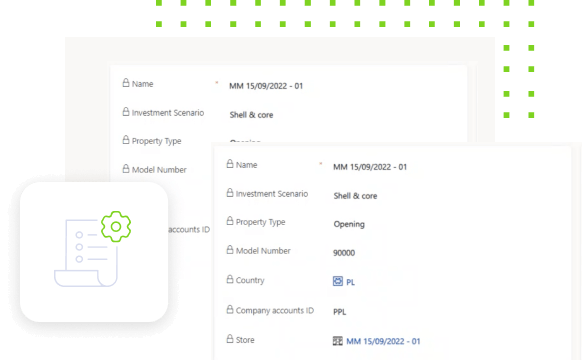
The store is the primary entity in the system, the entire process starts with the Store Model, which is created based on an Excel file (opening, relocation, closure and enlargement). It gathers essential data for each process, including key dates and list of important tasks.
The system automatically creates a series of tasks based on configuration and assigns them to appropriate employees (considering country specific differences). Task deadline are automatically set according to predefined rules and can be updated if key dates change.
Authorized users can look certain dates to prevent changes, while other tasks have enforced sequence interactions, meaning they must be completed in a specified order.

Process Automation
The SLM system efficiently manages the process of opening new stores and relocating existing ones. It automatically creates new stores and closes those being relocated. Each store contains necessary data such as opening hours, address, contact information, financial data, IT operation data, delivery information and periodic closures. Users access to viewing and editing data depends on their assigned role.
The system also stores information about individuals responsible for specific stores within the organization, such as Area and Regional Managers. Automated processes ensure that some information in the system for responsible individuals is generated automatically based on established rules.

Property Tool
A key element of the system is an extensive contract management module, which allows users to oversee them. Thanks to automation, contracts are regularly extended and adjusted as needed. The system enables effective management of documentation and formalities.
Moreover, the functionality has been specifically designed to streamline the processes of entering, managing, and nurturing relationships with property owners throughout the lease lifecycle
System Scalabilty
System Scalability The SLM system is characterized by high flexibility, allowing the customization of many processes through configurable modules. This includes generating tasks, configuring parameters specific to each country (name, group assignments, languages, and more), and assigning organizational hierarchy (country, area, region, and more).
At the start of each process, data is imported into the system as Excel files. Trained PEPCO users can easily handle these files, including their formulas and layout, without significant changes to the system code. The implemented data import logic automatically maps the data and transfers it to the appropriate fields in the SLM system.

Power BI Reporting
The SLM system features advanced reports generated by Power BI, enabling detailed analysis of the number of store openings, relocations, expansions, and closures compared to previously budgeted values over a specified time frame (store forecasts). These reports provide not only current operational data but also trend visualizations and comparisons, supporting decision-makers in making informed management decisions

Data Migrations
Due to the development of the new SLM system, an in-depth data migration from the previous AX system was conducted before activation. This process accounted for numerous table dependencies and adjustments to the new structure, which differed from the previous one.
Due to the large volume of data, the migration process took many hours. Thorough migration testing conducted before launch and the involvement of both parties during planning, mapping, and implementation ensured a smooth process.