Addressing your most complex cloud challenges
Cloud architecture unclear or inconsistent?
Build a secure, repeatable Azure foundation that scales with your business.
AI initiatives stuck in pilots?
Deploy production‑ready AI directly inside your core business processes.
Legacy apps slowing innovation?
Modernize critical systems on Azure without disrupting daily operations.
Governance blocking speed and delivery?
Enable fast delivery with clear guardrails for security and compliance.
Cloud strategy & FinOps
We help you build a cloud adoption strategy that connects architecture, people and budget: joint business & IT roadmap for Azure adoption and FinOps practices to keep spend predictable.
Secure Azure landing zones & governance
We design and deploy repeatable landing zones tailored to enterprise realities:
subscription and resource group design, identity & access management, policies, blueprints, logging, monitoring and governance tooling that keeps your teams safe – even when you scale fast.
Modernizing applications on Azure
We move critical systems to Azure without breaking your business: assessment of existing workloads and technical debt, choosing what to rehost/refactor/rebuild, integration with ERP, CRM, data platforms and legacy systems.
DevOps automation & platform engineering
AI apps & Copilots on Azure
We build AI that works inside your processes: AI applications powered by Azure OpenAI, Azure AI Services and Azure Cognitive Services; custom copilots and agents with Copilot Studio, integrated with your CRM.
We ensure stable cloud operations with proactive monitoring, performance optimization, security management, and continuous platform improvements.

Companies using Azure report significantly faster ability to respond to new requirements, market changes, and evolving business needs.


We combine Microsoft Azure with Dynamics 365, Power Platform, Copilot Studio and Microsoft Foundry to build platforms that connect your front‑office, operations and data. Typical building blocks:
Azure
Dynamics 365
Power Platform
Azure AI & Azure OpenAI
Microsoft Foundry
Microsoft Fabric & analytics
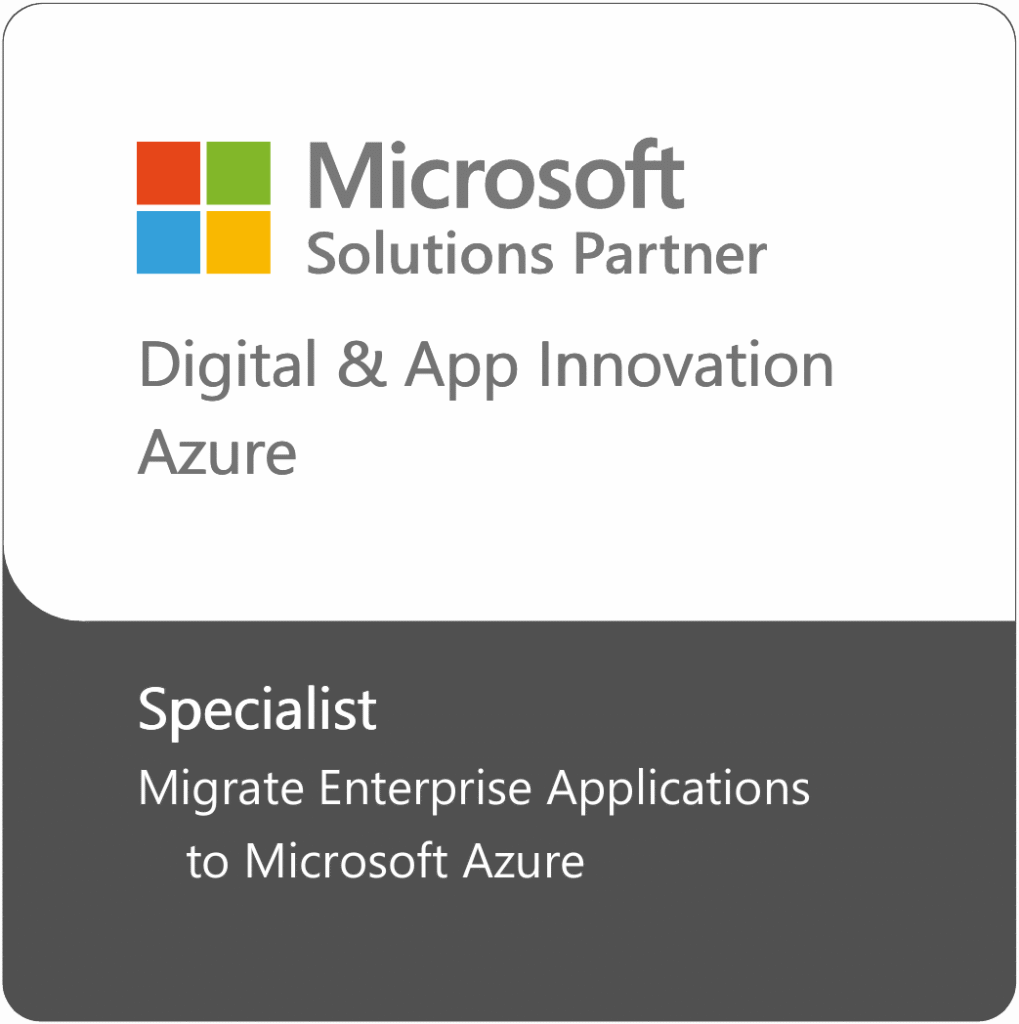
We are one of just a few companies worldwide with this exact combination of Azure, Dynamics 365 and Power Platform competencies:


Why Netwise
Proven expertise and a solid track record (300+ platforms delivered) in implementing complex Microsoft solutions for large enterprises.
Azure is Microsoft’s cloud platform it’s where companies run applications, store and manage data, connect systems together, and increasingly, build AI solutions.
Microsoft 365 is the toolkit most businesses already run on – Teams, Outlook, Word, SharePoint. It’s ready to use from day one, built for the day-to-day: communication, documents, collaboration.
Azure operates on a different level. It’s not a set of applications – it’s the platform companies build on. This is where organizations run custom applications, manage data at scale, connect disparate systems, and develop AI solutions shaped around their own operations. You turn to Azure when standard tools stop being enough and the business needs something built specifically around how it actually works.
There’s no single answer – Azure pricing depends on which services you use, how they’re configured, which region you operate in, and your actual consumption. What matters for the business is that cost isn’t left to chance: Azure provides concrete levers to keep spend predictable – budget alerts that surface overruns early, autoscaling that aligns capacity with real demand, and reserved capacity for workloads you can plan ahead of time. Done right, cloud spend becomes something you manage, not something that manages you.
An Azure landing zone is the foundation the entire environment is built on – subscriptions structured to scale, identity and access governed from the outset, networking, security, and monitoring built into the architecture rather than retrofitted once problems surface. Skip it, and technical debt shows up fast once the environment grows.
Azure provides the tools and safeguards needed to support GDPR – but compliance itself isn’t something you get out of the box. It still depends on how your organization handles data day to day: processing, access, retention, and governance.
For most services, you select the region, giving you direct control over where your resources and data are stored. Specific rules can vary slightly by service, so it’s worth confirming for anything with strict residency requirements.
In most cases, yes. Some workloads can be lifted over as-is; others are better served by gradual modernization. The right path depends on how the application is architected and how much technical debt it carries.
Generally, yes. Azure connects with ERP platforms, CRM systems, data platforms, other SaaS tools, and even on-prem infrastructure. This happens through APIs, prebuilt connectors, and integration services like Azure Logic Apps and Azure API Management, purpose-built for linking systems together without a full rebuild.
Yes, and it’s a common setup. Many companies keep certain workloads on-premises for regulatory, latency, or legacy reasons, while running other parts of their infrastructure in Azure. Some go further and combine Azure with other cloud providers, depending on where each workload fits best.
Through a combination of availability zones, automated backups, data replication, and multi-region deployment. The idea is redundancy at every layer: if one zone or region has an issue, traffic and workloads shift automatically, so applications keep running instead of going down.
A broad range – AI assistants and agents, document processing and extraction, enterprise search, content generation, predictive models, and workflow automation. The building blocks come from Azure AI Foundry, Azure AI Search, Document Intelligence, and Azure OpenAI, so most of this can be assembled without starting from scratch.
Azure OpenAI gives developers direct access to the underlying models and APIs, for building custom AI applications with full control over logic and integration. Copilot Studio sits a level higher: a low-code environment for building and managing AI agents, aimed at teams who need results without a dedicated development team behind every agent.
Microsoft’s unified platform for building, deploying, monitoring, and governing AI applications and agents across the enterprise – one control plane for AI instead of a patchwork of separate tools, covering models, agents, memory, and governance in one place.