The business world is moving faster than ever, and we all need smarter ways to turn information into action. A new approach that’s making this possible is Databots – AI-powered assistants that let you “talk” to your data. They’re changing how we interact with business information, allowing us to ask questions, generate insights, and create reports using everyday language.
These tools work within intelligent, autonomous systems called Agentic BI, which constantly analyze data, spot trends, and offer proactive recommendations. In this article, I want to show you how these technologies make business intelligence more intuitive and accessible, empowering us to make better decisions with less effort and technical expertise.
Adoption of AI assistants is speeding up rapidly. In 2024, about 13.5% of EU companies with 10 or more employees used AI technologies like natural language generation and machine learning for data analysis. For larger organizations, the number jumps to over 41% . This trend shows that Databots are becoming an essential tool for any business looking to get faster insights, make more informed decisions, and boost efficiency.
What is a Databot?
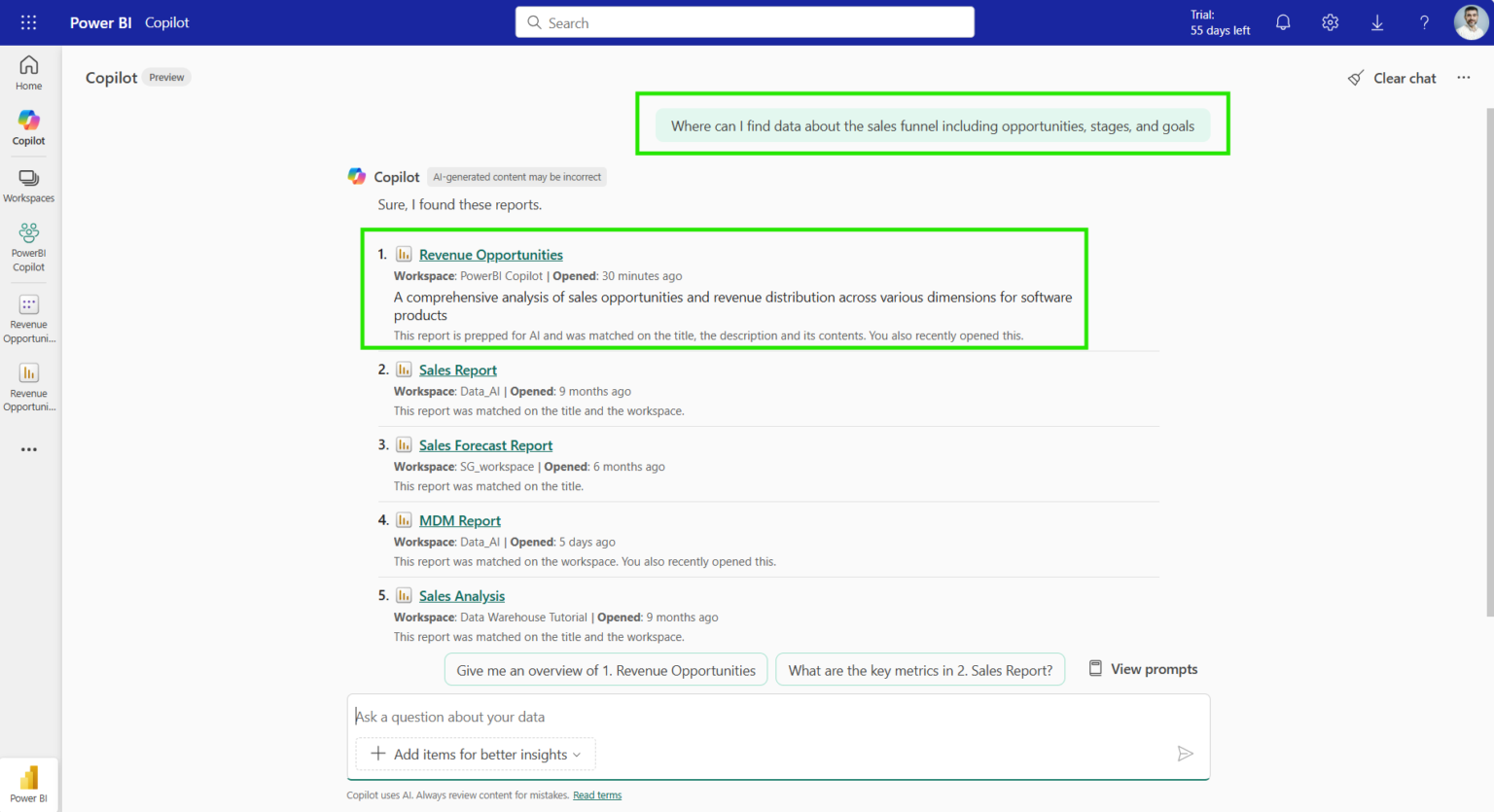
A Databot is a type of conversational AI – a virtual assistant built specifically to work with data. It can connect to various data sources, from databases and spreadsheets to live sensor feeds and even simple documents. Once connected, it helps you explore the information inside.
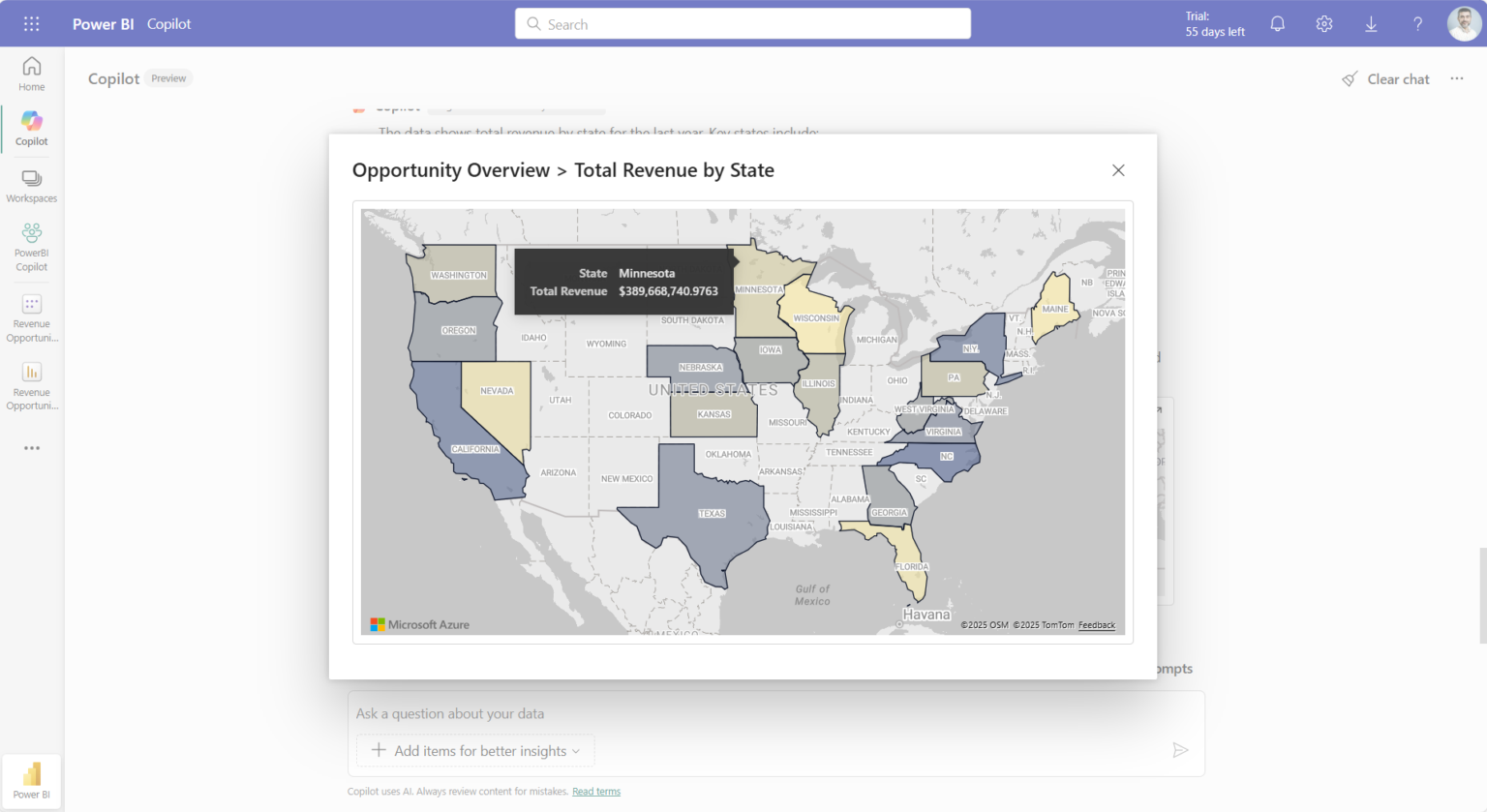
Instead of running complex queries, I can just ask it a question in plain language, and a Databot will give me an answer, a visualization, a summary, or even a suggestion. Databots have made it much easier to turn raw data into valuable insights you can use in business, education, or everyday life.
- Deeper data interaction – in addition to retrieving numbers, a Databot helps you understand them. By answering questions, spotting patterns, explaining relationships, and automating routine tasks, it makes working with data as simple as asking a question in plain language.
- Versatility – because data lives in many different places, Databots are built to adapt. They can connect to databases, files, APIs, or even live sensor feeds – and they often work across multiple interfaces, whether that’s chat, text, or voice.
- AI integration – the real advantage comes from AI capabilities. Databots use generative AI and machine learning to interpret intent, summarize complex findings, and automate parts of the analysis. This makes them responsive and proactive in helping users get more value from their data.
Databots are a combination of data science, natural language processing, and chatbot technologies. The first versions appeared around the 2010s, but they were mostly simple bots connected to enterprise systems for basic reporting. Today’s Databots are a world apart. They combine advanced conversational AI with powerful data connectivity and analytics, making it possible for us to literally “talk to our data” and get powerful insights in seconds.

How are Databots used in the real world?
Because they’re so good at handling data, Databots are quickly becoming a core part of modern business. They can adapt to different roles across an organization, and I’ve seen them used in a few different ways:
- For business professionals – Databots make it easy to get insights without needing technical expertise or writing complex queries. From summarizing data to generating reports and supporting decisions, they help analysts and managers work faster and with more confidence.
- For developers and data scientists – Databots are great for automating repetitive tasks. They can help with exploratory data analysis, generate code, produce data summaries, and even suggest relevant code snippets to streamline workflows.
- For administrators – beyond their traditional responsibilities like managing database performance and security, administrators can use Databots to monitor systems, detect anomalies, and generate automated reports. This reduces manual effort and improves oversight.
How are Databots different from chatbots?
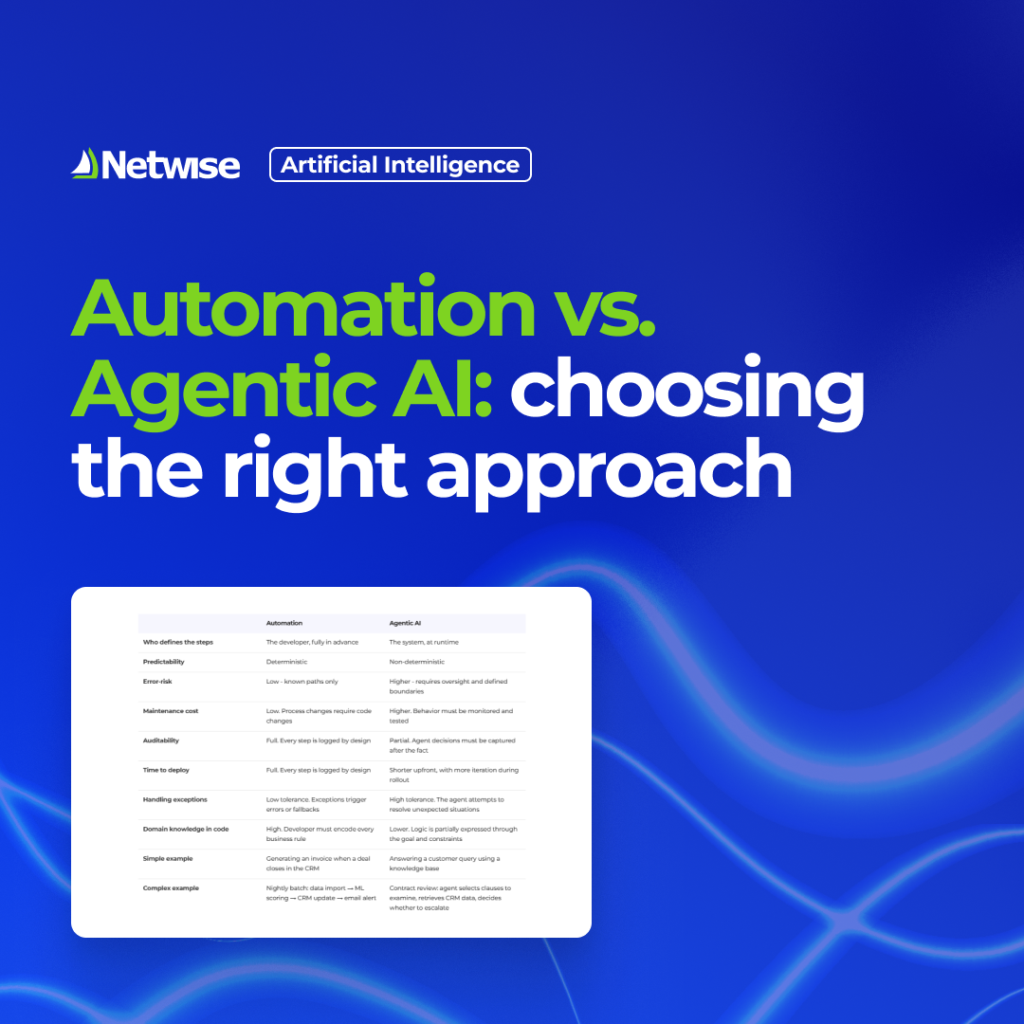
At first glance, a Databot might look just like a regular chatbot. But while a generic chatbot is built to handle simple conversations, like answering FAQs or helping a customer with a support query, a Databot is designed for something much more specialized: data interaction and analytics. Here’s a look at the key differences between the two.
Domain-specific intelligence
Data integration and analysis
Advanced Natural Language Understanding (NLU)
Automated insight generation and recommendations
Integration with analytical tools
Task automation with data context
Data focus
| Databots | Generic chatbots | |
|---|---|---|
| Domain expertise | High, data-centric, and domain-specific | Low to moderate, general queries |
| Data connectivity | Direct connection to databases and BI tools | Limited or no data integration |
| Analytical ability | Advanced data analysis, insight generation | Basic, scripted responses |
| Natural language understanding | Context-aware, multi-turn dialogue | Keyword or rule-based matching |
| Integration with tools | Tight with analytics platforms | Mostly customer service platforms |
| Automation | Data-driven automated reports, workflows | Basic task automation (e.g. FAQs) |
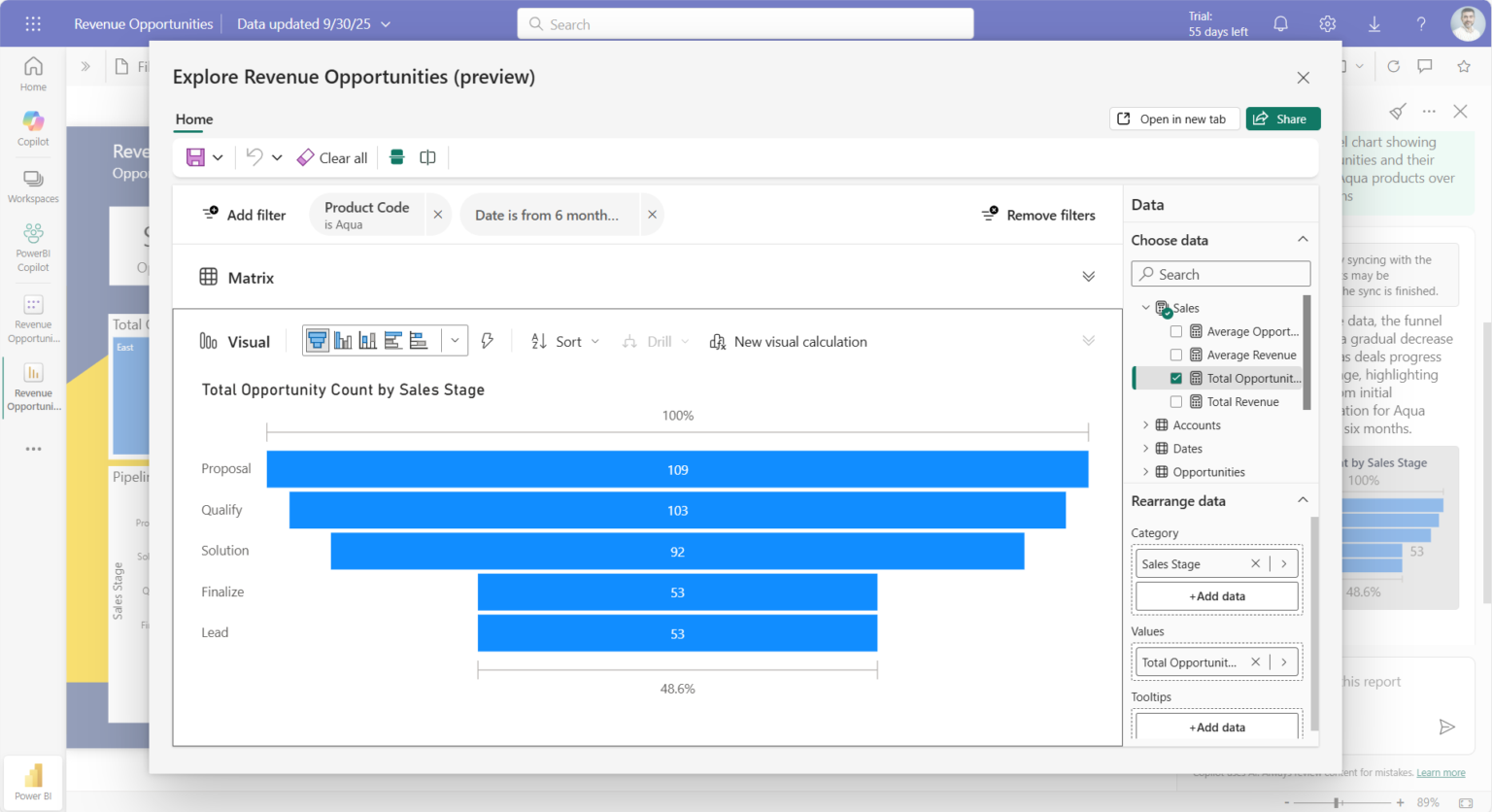
Understanding Agentic BI
If a Databot is an AI assistant you can talk to, Agentic BI (short for Agentic Business Intelligence) is the intelligent ecosystem that a team of Databots lives in. It’s an advanced BI system that uses autonomous AI agents to analyze data, generate insights, and even support decision-making with very little human help.
In essence, Agentic BI is a specialized type of Agentic AI focused specifically on business intelligence. Agentic AI systems can operate on their own in many fields (like healthcare, supply chain, or IT), but Agentic BI tailors their principles to data analytics and business decision-making. It’s designed to be autonomous, collaborative, and can reason on a higher level – all to help us make smarter, faster, and more data-driven decisions.
- Autonomous AI agents – these are the multiple AI agents that work together to continuously collect, process, and analyze business data. They don’t wait for a prompt but proactively look for trends, spot anomalies, and find opportunities for action.
- End-to-end intelligence – Agentic BI integrates data infrastructure, semantic models, and analytics workflows into a single system. The AI agents can operate contextually across data pipelines and reporting layers for a richer analysis.
- Proactive insights – unlike traditional BI, which often reacts to queries or reports, Agentic BI anticipates business needs and delivers real-time, actionable insights directly to decision-makers.
- Continuous learning and adaptation – the AI agents evolve over time, learning from new data and user interactions to improve their recommendations and analytics accuracy.
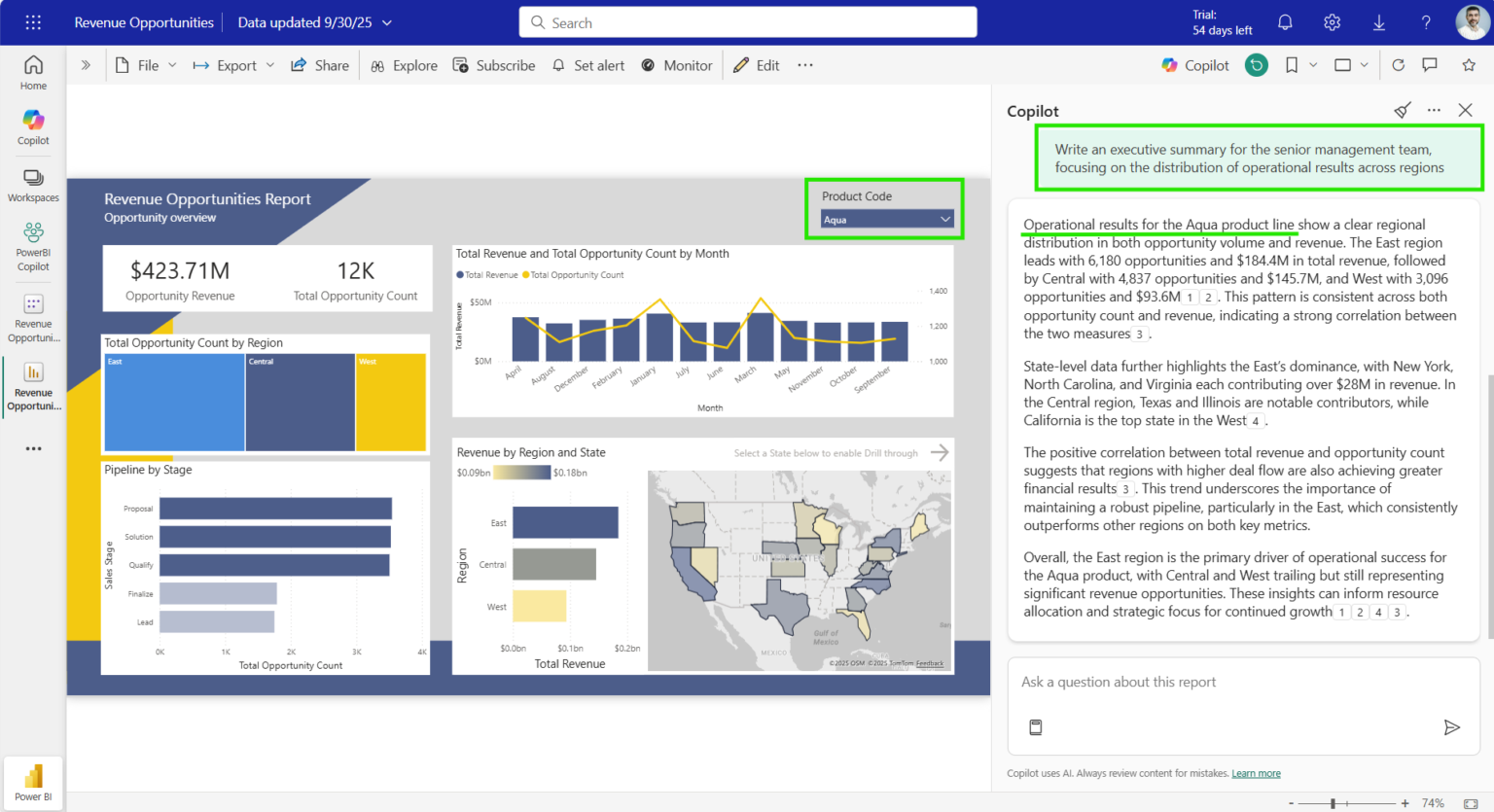
How do Databots and Agentic BI work together?
There’s a natural connection between Databots and Agentic BI. Databots are at the operational core of Agentic BI systems. They act as AI-powered analysts that interact conversationally with both data and users, all while managing complex workflows on their own.
Agentic BI brings all aspects of data (acquisition, transformation, analysis, and presentation) into a single, unified, AI-powered ecosystem. This allows Databots and other AI agents to maintain full context, producing insights that are more precise, predictive, and dynamic than traditional BI tools can provide.
Databots and Agentic BI represent a shift from reactive, manual analytics to proactive, autonomous, and continuous intelligence. Together, they empower organizations to make faster, smarter decisions while automating analytical tasks at scale.
Distinguishing between Databots and Agentic BI
While both showcase the evolution of AI in data, these tools have different roles. Databots are generally focused on conversational, task-oriented interactions. They help you query information, generate reports, or uncover insights on demand. Agentic BI, on the other hand, operates at a broader, more autonomous level. It coordinates multiple AI agents, manages end-to-end workflows, and delivers proactive, context-aware, organization-wide insights.
Understanding these differences helps businesses see where each approach fits – Databots excel at improving individual or team-level productivity, while Agentic BI drives continuous, enterprise-wide intelligence and decision automation.
Here is a brief overview of their differences.
Unlocking the future of data analysis with AI
Databots are a game-changer for how we interact with data, moving us away from manual, technical processes toward conversational, AI-driven experiences. When we combine them with the broader concept of Agentic BI, these AI assistants work within an intelligent, autonomous ecosystem – continuously generating insights, anticipating trends, and supporting decision-making.
The result is faster, more accurate, and more collaborative analytics. By simplifying complex tasks and making data interaction intuitive, Databots and Agentic BI are redefining the future of business intelligence. They make actionable insights accessible to everyone, regardless of their technical expertise.
If you’d like to see how Databots and Agentic BI could work for your organization, feel free to reach out. With our expertise in data platforms and AI implementations, we can help you choose the right approach to introduce AI capabilities for maximum results.