There’s a quiet revolution happening on the floor of every modern contact center. It shows up in faster case resolutions, cleaner knowledge bases, and supervisors who finally have the data to do their jobs well. At the center of this shift – and built directly into Microsoft Dynamics 365 Customer Service – are AI agents: not tools you use, but teammates that work alongside you.
Five Dynamics 365 Customer Service AI Agents
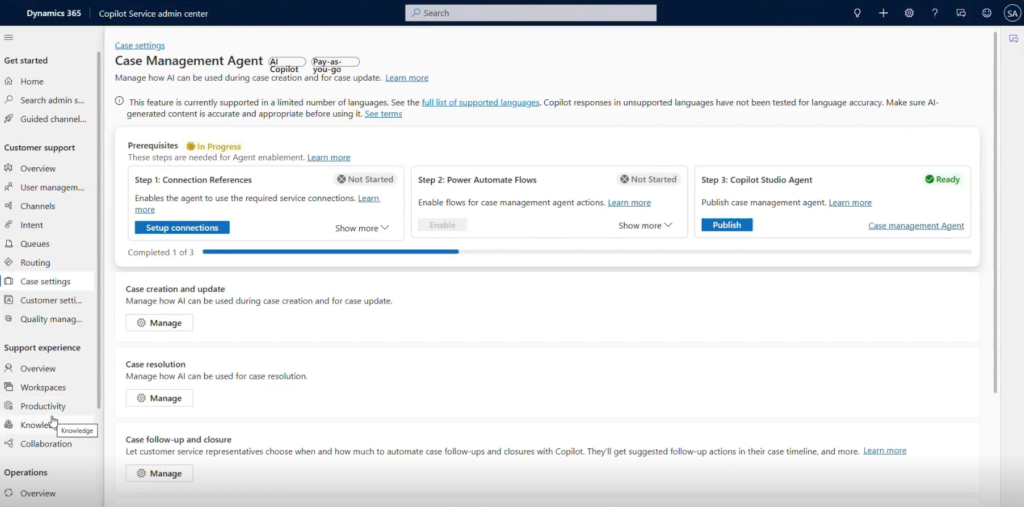
The Case Management Agent
This is the frontline worker of the AI team. When a customer inquiry arrives, whether by email, chat, or another channel, the Case Management Agent springs into action. It automatically creates the case, attempts to resolve the issue end-to-end, and communicates directly with the customer throughout the process. If it can close the case, it does. If it can’t, it escalates to a human agent with full context already in hand.
The result is a seamless experience for the customer and a dramatically lighter load for human support staff, who now spend their time on the cases that genuinely require their expertise.
The Knowledge Management Agent
Ask any CRM consultant what the most painful part of a deployment is, and they’ll almost certainly say the same thing: the knowledge base. Organizations almost always have a knowledge base – the problem is that it’s rarely ready. Articles are outdated, fragmented, or written in long, unwieldy documents that don’t map neatly to the specific questions customers actually ask.
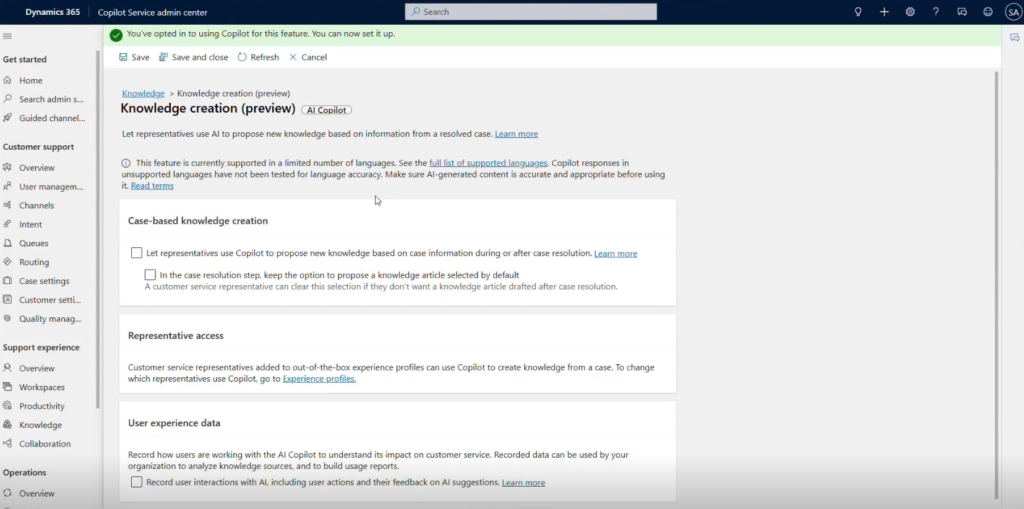
The Knowledge Management Agent addresses this problem at its root. When a case is resolved, the agent automatically generates or suggests a new knowledge article based on that resolution. The human agent simply reviews and approves it. Over time, the knowledge base doesn’t just stay current: it grows smarter with every interaction.
This is a big shift. Keeping a knowledge base up to date has traditionally required discipline, dedicated resources, and a process that almost always falls behind. AI takes that burden off the team’s plate entirely.
The Intent Recognition Agent
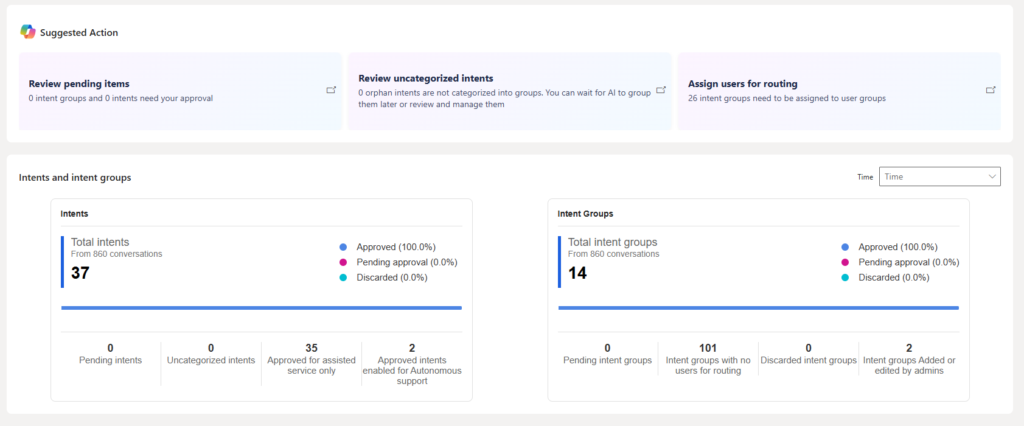
Understanding what a customer wants – their intent – has always been the first and most critical step in resolving any inquiry. The Intent Recognition Agent handles this at scale.
By analyzing incoming communications across every channel: email, phone calls, SMS, web chat, Facebook Messenger, the agent identifies the customer’s intent and routes the interaction accordingly. For straightforward issues that can be resolved automatically, the agent handles them from start to finish, often without a human agent ever becoming aware that an inquiry came in at all. For more complex cases, it hands off to the right person with context already attached.
Supervisors gain something valuable here too: clear visibility into how many inquiries AI is resolving autonomously, and how much time their human agents are saving as a result.
The Quality Evaluation Agent
Quality assurance in customer service is not new. What is new is the ability to do it comprehensively and automatically.
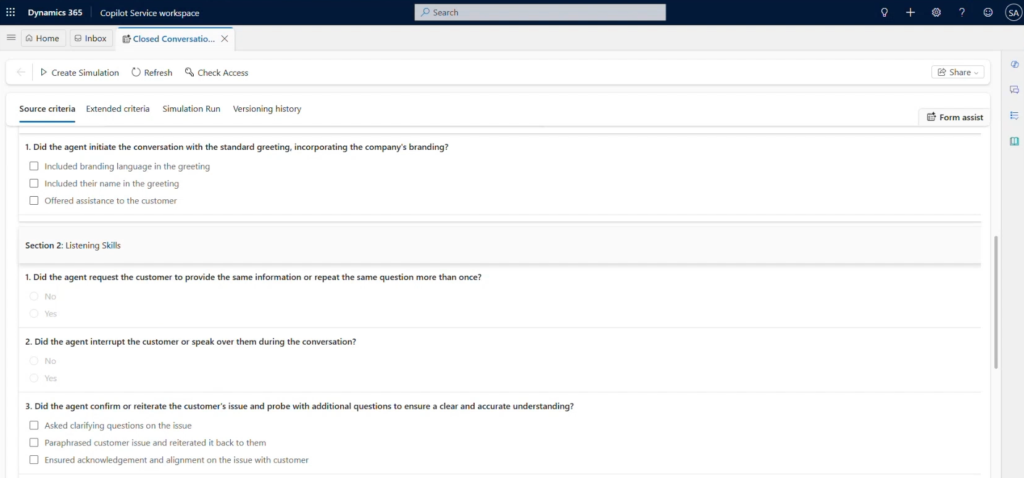
The Quality Evaluation Agent allows organizations to codify their service standards – proper greetings, the right questions to ask during a resolution process, appropriate sign-offs, acceptable language and tone – and then automatically evaluate interactions against those standards.
Conversations can be reviewed periodically, randomly sampled, or flagged by specific criteria (for example, any interaction where the customer’s sentiment turned negative).
Each conversation receives an overall quality score based on weighted criteria. When a score falls below a defined threshold, the system automatically alerts a supervisor. That supervisor can then act – whether it means immediate escalation, a coaching conversation, or a structured training program for the agent involved.
The Email Classification Agent (Preview)
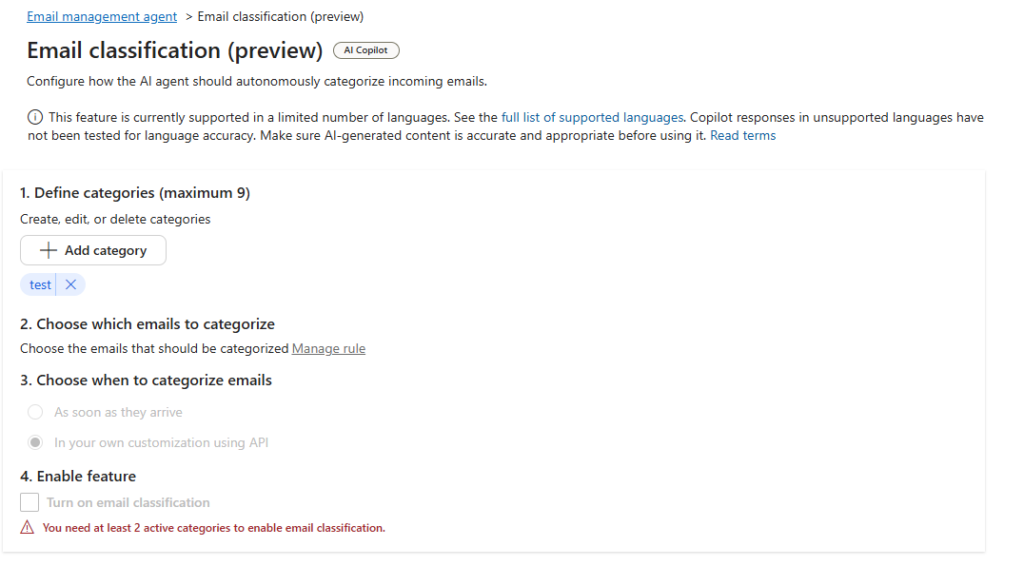
One of the newer agents in the customer service lineup is the Email Classification Agent, currently in Preview. It focuses on a very simple task that still causes a lot of friction in support teams: sorting incoming emails.
When a message comes in, the agent reads it and assigns it to one of up to nine categories defined by the organization – for example billing questions, complaints, or general service requests. It doesn’t rely on fixed keywords or rules. Instead, it looks at the overall meaning of the message and classifies it based on intent.
Doing this early makes everyday work easier. Emails land in the right queue, the right automation can kick in, and teams don’t waste time manually triaging messages before real work begins. Human agents and other AI agents start with cleaner, better-organized input.
AI Agents as team members
What makes this moment genuinely different from previous waves of automation is the nature of the relationship between human workers and AI. These aren’t tools that employees log into. They’re becoming, in a very practical sense, members of the team.
Take a sales team that works with a lead research AI agent. After a period of adjustment, the human salespeople will largely stop performing that research themselves. They’ll review what the agent surfaces, apply their judgment, and act – but the legwork will be the agent’s. The same dynamic is emerging in customer service, where AI agents are handling the routine, the repetitive, and the time-consuming, leaving humans to focus on work that requires human judgment.
This is the real promise of the current generation of AI in CRM: not replacing the team but expanding what the team can do.